Clean drinking water is something many people take for granted. Turning on a tap, filling a bottle or drinking a glass of water can seem like an ordinary part of everyday life. But for billions of people around the world, safe and reliable drinking water remains out of reach.
In 2026, the global water crisis continues to affect communities across Africa and other vulnerable regions. While important progress has been made over the past decades, the world is still far from achieving universal access to safe and affordable drinking water.
The latest WHO and UNICEF Joint Monitoring Programme estimates show that in 2024, approximately 2.2 billion people worldwide lacked safely managed drinking water services. At the same time, billions more lacked adequate sanitation and hygiene services.
The challenge is therefore not only about finding water. It is about ensuring that water is safe, accessible, reliable and sustainable.
Global progress, but not fast enough
The world has made progress. Between 2015 and 2024, the proportion of the global population using safely managed drinking water increased from approximately 68% to 74%.
This represents a major achievement. However, the remaining gap is enormous.
Billions of people still live without the level of water service necessary for a healthy and dignified life. The situation is particularly difficult in low-income countries, rural areas and communities affected by conflict, drought, displacement and climate change.
According to the United Nations, the current pace of progress remains insufficient to meet the 2030 Sustainable Development Goal of universal and equitable access to safe and affordable drinking water.
The question for 2026 and 2027 is therefore not whether progress is possible.
It is whether the international community can accelerate it.
Africa remains at the heart of the water challenge
Across many African countries, access to clean water is closely connected to poverty, public health, education, agriculture and economic development.
When a community does not have a nearby source of safe water, families can spend hours collecting it. This burden often falls disproportionately on women and girls.
Time spent searching for water is time that cannot be spent at school, working, caring for children or developing economic activities.
A reliable water source can therefore create benefits far beyond drinking water itself.
It can help improve:
- Public health
- Children’s education
- Women’s economic participation
- Food security
- Hygiene and sanitation
- Community resilience
- Local economic development
- Climate adaptation
Water access is not simply a humanitarian issue. It is a development issue.
Chad: one of the communities that cannot be left behind
Chad faces particularly significant challenges in providing safe drinking water to its population.
According to UNICEF data, only around 6% of the population currently uses safely managed drinking water services. Around 52% have access to at least basic drinking water services, while other communities depend on limited, unimproved or surface water sources.
These figures illustrate the scale of the challenge.
For people living in rural and underserved areas, the distance to a reliable water source can have a direct impact on everyday life.
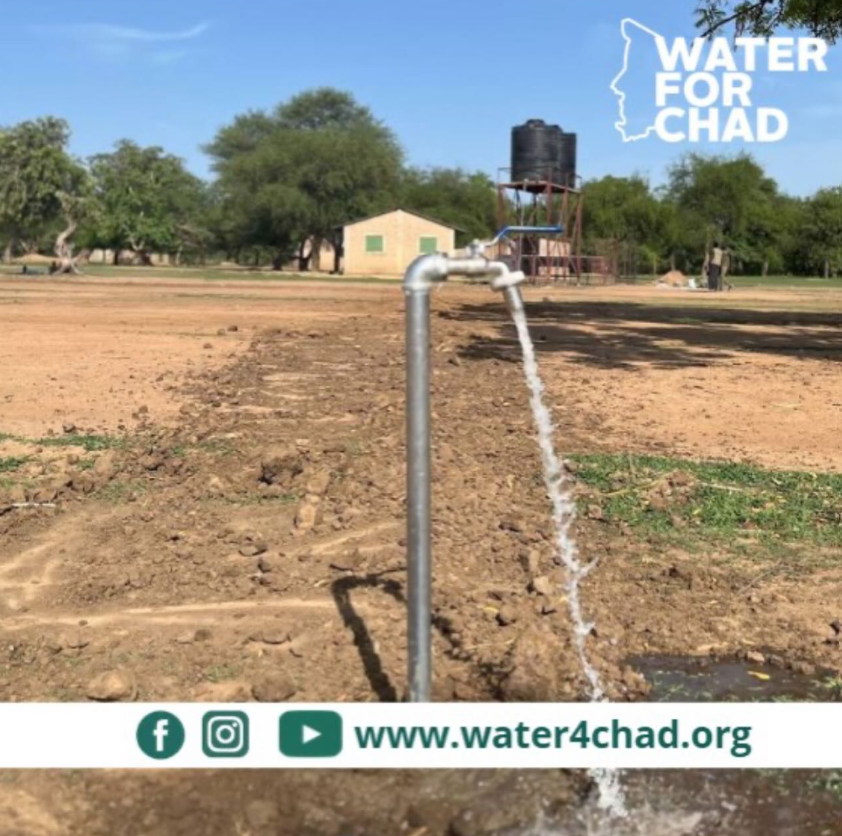
A functioning water pump can mean that a family no longer needs to walk long distances to collect water. It can mean that children have more time for school. It can mean better hygiene and fewer risks associated with unsafe water.
Most importantly, it can give an entire community a more secure foundation for the future.
Climate change is making the situation more difficult
The water crisis cannot be separated from climate change.
Increasing temperatures, changing rainfall patterns, droughts and extreme weather events are placing additional pressure on water resources in many parts of the world.
For communities that already have limited infrastructure, a prolonged drought can have devastating consequences.
Climate-resilient water projects are therefore becoming increasingly important.
It is not enough to build a water point and leave it without a long-term plan. Sustainable projects should consider the local environment, groundwater availability, maintenance, community participation and the long-term ability to operate the infrastructure.
This is why local knowledge and community involvement are essential.
What could happen in 2027?
Predicting the exact number of people who will gain access to drinking water in 2027 is difficult because global statistics are published with a delay and depend on national data collection.
However, the overall direction is clear.
If investment and action accelerate, more communities can gain access to safe drinking water. If progress remains at its current pace, the world risks falling further behind the 2030 water targets.
The priorities for 2027 should include:
1. More investment in rural water infrastructure
Remote communities often receive less investment than urban areas. Wells, boreholes, pumps and small-scale water systems can provide practical solutions when they are properly designed and maintained.
2. Stronger community participation
Water projects are more sustainable when local communities are involved in planning, management and maintenance.
3. Climate-resilient infrastructure
New projects should take future droughts, changing rainfall patterns and environmental pressures into consideration.
4. Better sanitation and hygiene
Clean drinking water alone is not enough. Water, sanitation and hygiene must be addressed together.
5. Greater transparency
Donors and supporters increasingly want to understand how their contributions create measurable impact. Reporting project locations, progress, infrastructure and community benefits can strengthen trust.
Why local water projects matter
Large international targets can sometimes feel distant from everyday life.
A global figure of 2.2 billion people without safely managed drinking water is difficult to imagine.
But the impact becomes much clearer when we look at an individual community.
A new water pump can reduce the distance people need to travel. It can provide safer water for families. It can improve hygiene. It can give children more time to attend school.
One project may not solve the global water crisis.
But one project can change thousands of daily routines.
And thousands of successful projects can contribute to global change.
Water4Chad: turning action into impact
At Water4Chad, our mission is focused on a simple but essential objective: helping communities in Chad gain better access to clean and sustainable drinking water.
Water projects are not simply about infrastructure.
They are about people.
They are about families who deserve safe water, children who deserve the opportunity to learn, and communities that deserve the tools to build a healthier and more resilient future.
Our approach is based on supporting concrete water projects and bringing resources closer to communities that need them.
As we move from 2026 toward 2027, continued support for water initiatives in Chad and across Africa will be essential.
The road to 2030 starts today
The United Nations Sustainable Development Goal 6 calls for universal and equitable access to safe and affordable drinking water by 2030.
With only a few years remaining, the world needs faster progress.
Governments, NGOs, local organizations, donors, businesses and communities all have a role to play.
The water crisis is enormous, but solutions already exist.
A well.
A borehole.
A water pump.
A filtration system.
A maintenance program.
A community trained to manage its own water infrastructure.
These may seem like simple solutions, but their impact can be transformative.
2027 must be a year of action
The future of water access will depend on the decisions made today.
Climate change will continue to put pressure on water resources. Population growth will increase demand. Inequalities will remain unless investment reaches the communities that need it most.
But there is also an opportunity.
By investing in sustainable water infrastructure, supporting local organizations and empowering communities, we can accelerate progress.
At Water4Chad, we believe that access to clean water should not depend on where someone is born.
Clean water is a human right. It is a foundation for health, education, dignity and development.
As 2027 approaches, the goal should be clear: turn the global water challenge into local action, one community at a time.
Water4Chad — Water for life. Action for communities. A better future for Chad.